Three Generations on the Slopes of Mount Elgon
The Kalenjin family has farmed this stretch of Mount Elgon, in Eastern Uganda, for three generations. Long before the name went on a coffee bag, it was simply the work our family did right from picking, pulping, drying, and carrying cherry down the mountain to the local market.
That changed when we decided to sell under our own name. Every bag of Kalenjin Coffee is roasted by hand in our local village, in batches small enough that one person can taste each one. We didn’t do this to build a brand. We did it so the people who grow the coffee could also be the ones who sell it and so the forest and the volcanic, fertile land it grows under would stay standing rather than be cleared for something else.
A Journey That Carried More Than People
To understand why coffee grows here at all, you have to go back further than three generations — closer to three thousand years.
Our ancestors moved south from the borderlands of South Sudan and Ethiopia, following the Nile river into the East African highlands. Mount Elgon is known to us as Kapkugo, meaning “the grandfather’s home” is remembered as the place these migrating clans regrouped, before scattering outward over the centuries that followed.
As our elders tell it, that journey carried more than people. Ethiopia’s highlands are where coffee itself is said to have been discovered, and our family’s telling holds that the wild coffee cherry travelled with our ancestors as they moved, eaten along the way, long before anyone thought to roast or brew it. It’s oral history, not a written record. But it’s the story that explains why Arabica, native to those same highlands, is what grows on this mountain today.
Where the Clans Settled
From Kapkugo, the clans dispersed. The Sabiny and Pokot settled in what is now Uganda. The Nandi, Kipsigis, Tugen, Keiyo, and Marakwet among others remained in Kenya’s Rift Valley. To this day, we still call each other Kapkugoo — because the elders remember that we share one grandfather. Ask any of us where we’re from, and you’ll hear the mountain’s name before you hear the country’s.
Farming Where the Mountain Makes Its Own Weather
Mount Elgon isn’t just where we happen to farm. Its shape decides how the coffee tastes.
At 1,900 to 2,300 meters above sea level, the altitude alone would set this coffee apart but the mountain does more than sit tall. Its slopes trap moisture rising off the plains below and hold cloud cover over the gardens through the hottest part of the day, cooling growing conditions in a way flatter land can’t. That combination of altitude and shade is what lets the cherries ripen slowly enough to build the sugars that later show up as sweetness in the cup.
We grow under a canopy of indigenous trees rather than clearing land for full sun, a choice that costs us yield but keeps the forest, the soil, and the water table intact. The same trees that shade the coffee also hold the slope together when the rains come hard off the caldera.
Small Enough to Taste Every Batch
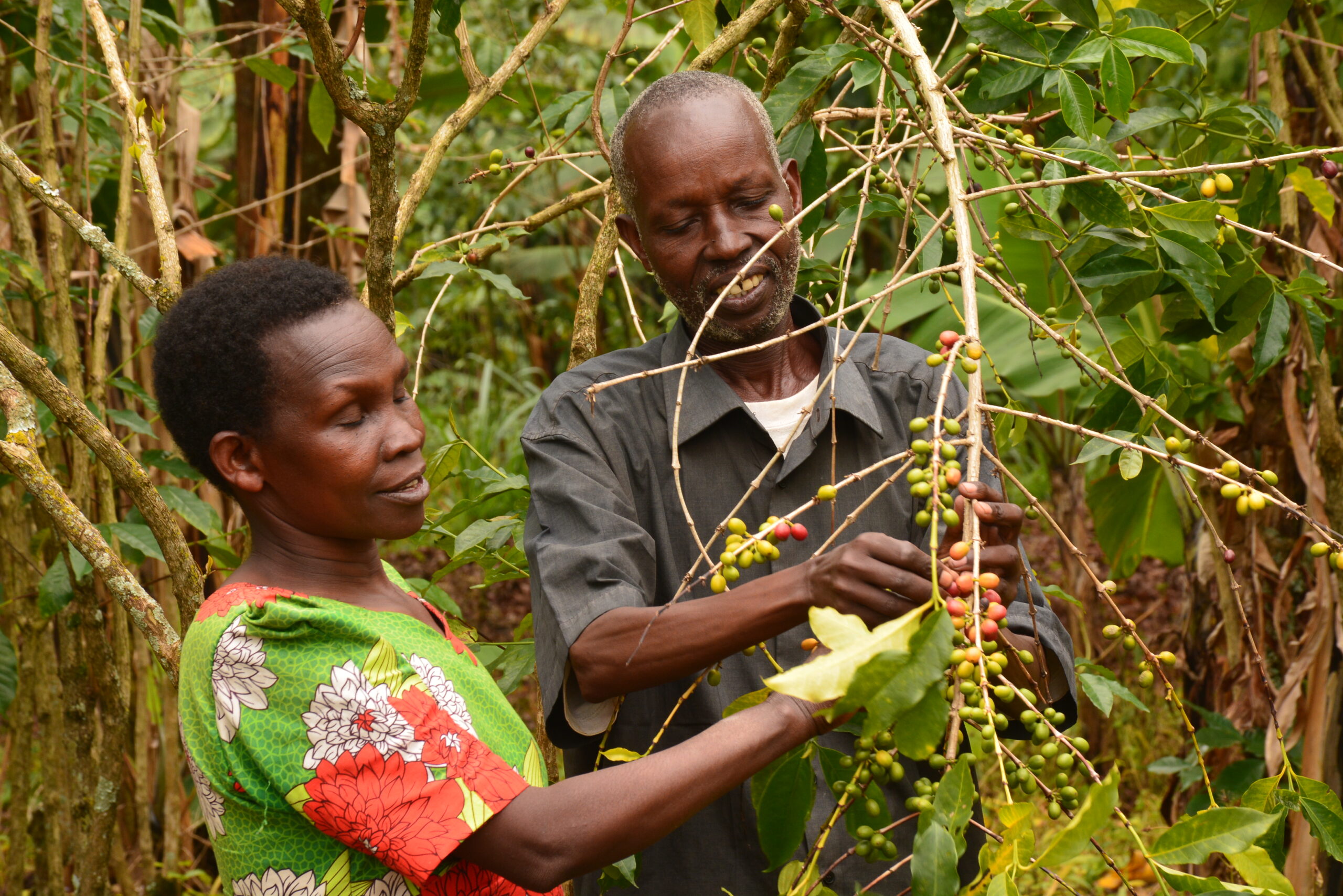
More than 300 smallholder families work this stretch of the mountain, most farming plots small enough to walk in an afternoon. Cherries are hand-picked and passes over several weeks, so only fully ripe fruit makes it into the harvest.
From there, everything happens close to where it was grown pulped within hours or days, fermented and washed in water fed by streams off the Elgon caldera, then dried for two to three weeks on raised beds, turned by hand.
Why We Stay Small
Our coffee roasting is done in small batches and hand roasted using wood, We keep it this way deliberately . Scaling up would mean roasting ahead of demand, in bigger batches by people who never met the farmer who grew the cherry. We’d rather stay small and be able to stand behind every bag.
Why the Name
Kalenjin is not a family surname, it’s the name our people have carried since long before this coffee had a label. It means, roughly, “I tell you.” It’s a fitting name for a coffee that comes with three thousand years of story behind it, grown by people who never stopped telling it.
What Selling Our Own Coffee Changes
There’s a different kind of pride in seeing your own name on the bag. For the families who pick, wash, and dry this coffee, it means watching something they made with their hands travel out into the world exactly as it left the mountain not repackaged, not renamed, not lost in someone else’s story.
That pride comes with something more practical too, farmers are paid fairly for the work, and a share of every bag sold goes straight back into the land that makes the coffee do well through planting trees, restoring the ecosystem the gardens depend on, and building eco-tourism that brings new income into the community alongside the harvest.
It also means we get to be specific instead of generic. This isn’t “Ugandan coffee” in the abstract, it’s coffee from one mountain, farmed by people who can point to the exact valley it came from, in a language that still calls each other Kapkugoo. Coffee that pays the farmer well, keeps the mountain green, and gives the whole community more reasons to thrive.
Frequently Asked Questions
Where exactly does Kalenjin Coffee come from?
It’s grown on the slopes of Mount Elgon in Eastern Uganda, at 1,900–2,300 meters above sea level, by more than 300 smallholder farming families.
What does the name “Kalenjin” mean?
It’s not a surname — it’s the name of the wider people our family belongs to, and it means roughly “I tell you.” Mount Elgon itself is known to us as Kapkugo, “the grandfather’s home.”
Is your coffee organic?
Yes — it’s 100% washed and organic Arabica, grown under a canopy of indigenous trees rather than in full sun.
Why is it grown under shade instead of in the open?
Shade from indigenous trees and cloud cover off the mountain slow down how fast the cherries ripen, which is what lets the sugars build that show up as sweetness in the cup. It also protects the soil and water table the coffee depends on.
Who actually processes the coffee — is it done on a big factory line?
No. Cherries are hand-picked, pulped within hours, washed in mountain water, and sun-dried on raised beds by the farming families themselves, close to where they’re grown. Roasting happens by hand in small batches, after an order is placed.
Can I visit the farms where this coffee is in Sipi Falls grown?
Yes — we run farm tours from Sipi Falls, a short walk from the gardens where the coffee actually comes from.
Why does buying this coffee support conservation?
A share of every bag sold goes back into reforestation and helping farmers convert to shade-grown methods — because the coffee only keeps growing if the mountain’s forest does too.